Ingredients
What is PDRN? The K-beauty ingredient, explained
Short for polydeoxyribonucleotide, PDRN is one of the most talked-about ingredients in Korean skincare. Here's what it is, where it comes from and how it fits into your routine.
By the Lemerence teamUpdated 3 min read
On this page
What does PDRN stand for?
PDRN is short for polydeoxyribonucleotide. It's a long name for a refined skincare ingredient made from short fragments of DNA.
On an ingredient list, PDRN usually appears as sodium DNA. You'll find it in serums, ampoules, creams and sheet masks, often alongside hydrating ingredients like glycerin and hyaluronic acid.
Where does PDRN come from?
Traditionally, PDRN is sourced from salmon DNA, which is why you'll hear PDRN products called "salmon serums." The DNA is extracted and purified into a refined ingredient before it goes into a formula.
Plant-based versions also exist, sometimes sold as "phyto-PDRN." These use DNA-like material from plants such as ginseng. Brands don't use these labels consistently, so the ingredient list and the brand's sourcing notes are your best guide.
A note on fish allergies
If you have a fish allergy, check the ingredient list and ask your doctor before trying a salmon-derived product.
We'll confirm the source of the PDRN in our PDRN + Retinol Night Serum on its full ingredient list at launch.
Why is everyone talking about PDRN?
PDRN rose to fame in Korea, where it became a signature of the "glass skin" look: skin that appears smooth, bouncy and lit from within. As K-beauty went global, PDRN followed, and it has become one of the buzziest ingredients in skincare.
Part of the appeal is texture. PDRN formulas tend to feel light and hydrating, and they layer easily under moisturizer.
What will you notice?
In a well-made formula, PDRN is part of the recipe for a bouncy, well-hydrated, healthy-looking finish. Skin can look plumper and feel softer, especially when PDRN is paired with good hydrators.
As with any skincare ingredient, results come from the whole formula and from consistent use, not from one ingredient on its own.
How to use PDRN in your routine
Step 1: Cleanse
Start with clean skin and pat it dry with a towel.
Step 2: Apply your PDRN serum
Smooth a few drops or a pea-size amount over your face and neck. Serums go on before creams.
Step 3: Moisturize
Follow with a moisturizer to keep hydration in. In the morning, finish with sunscreen.
PDRN plays well with most routines. It's commonly paired with hyaluronic acid, niacinamide, ceramides and peptides. Introduce any new product on its own first so you can see how your skin likes it.
Can you use PDRN with retinol?
Yes. PDRN and retinol are a natural night-time pair: retinol for smoothing the look of fine lines and texture, PDRN for a bouncy, hydrated look. Our guide to using PDRN and retinol together covers how to layer them, or you can keep it simple with a two-in-one serum like our PDRN + Retinol Night Serum.
Questions
Is PDRN the same as salmon DNA?
PDRN is the purified ingredient. It is traditionally made from salmon DNA, which is where the "salmon serum" nickname comes from. Plant-based versions are also available.
What is PDRN called on an ingredient list?
Look for sodium DNA. Some brands also mention PDRN by name in the product description.
Can I use PDRN every day?
Many PDRN serums are made for daily use, morning or night. Follow the directions on your product, and patch test anything new first.
Can PDRN be used with retinol?
Yes. They are often used together in the evening. Start slowly with retinol and keep moisturizer in your routine.
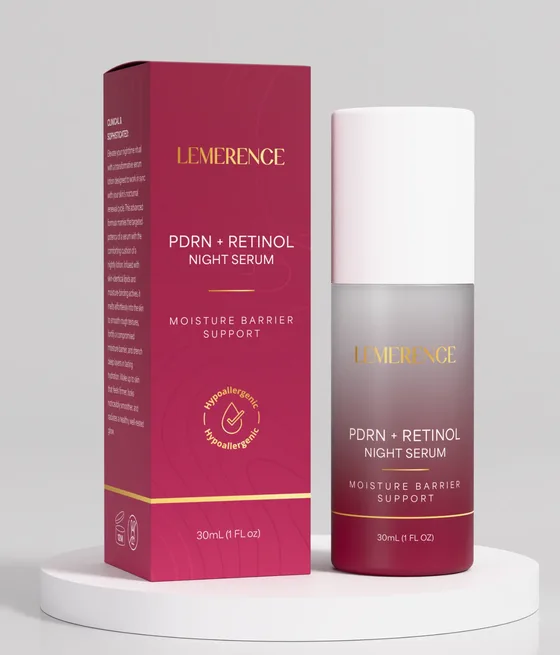
Coming soon
PDRN + Retinol Night Serum
Anti-aging night serum. Softens the look of fine lines and wrinkles.
Meet the serumThis guide is general skincare information, not personal advice. Lemerence products are cosmetics. If you have a skin concern that worries you, talk with your doctor.