Routines
Retinol and your moisture barrier: how to keep skin comfortable
Dryness and tightness are the top reasons people give up on retinol. A few simple habits keep your skin comfortable while you build up.
By the Lemerence teamUpdated 3 min read
On this page
What is the moisture barrier?
Your moisture barrier is the outermost layer of your skin. It's made with skin's own lipids, like ceramides, cholesterol and fatty acids, and it keeps moisture in.
When it's well moisturized, skin feels soft, smooth and comfortable. When it's dry, skin can feel tight, rough or stingy, and products you usually love may suddenly feel strong.
Why retinol can feel drying
Retinol is a strong ingredient, and it's common to notice dryness, flaking or tightness when you first start. For many people it settles as they build up slowly, but it's the moment a lot of people give up.
The goal is to keep your skin comfortable the whole way through, so you can stay consistent.
The sandwich method
The sandwich method is a simple way to make retinol feel gentler: you apply it between two layers of moisturizer.
Step 1: Moisturizer
After cleansing, apply a thin layer of moisturizer and let it settle for a minute.
Step 2: Retinol
Apply your pea-size amount of retinol over the top.
Step 3: Moisturizer again
Finish with another layer to keep skin comfortable overnight.
Some people mix their retinol with a little moisturizer instead, which is sometimes called buffering. Either way, it's a good place to start if your skin is dry or easily irritated.
Ingredients that keep skin comfortable
- Ceramides: lipids that help moisturizers feel nourishing and keep skin soft.
- Glycerin and hyaluronic acid: humectants that hold on to water for a hydrated feel.
- Squalane: a lightweight oil that softens without feeling greasy.
- Panthenol: a form of vitamin B5 with a soothing, comfortable feel.
- Niacinamide: a versatile ingredient that's easy to pair with retinol.
What to pause while you build up
- Exfoliating acids (AHAs and BHAs) and at-home peels
- Scrubs and cleansing brushes
- Other retinoids
- Very hot water on your face
- Heavily fragranced products, if your skin is easily irritated
You can bring exfoliants back later, on nights you don't use retinol.
Signs to slow down
Ease off if you notice stinging that doesn't settle, burning, redness that lingers or patches of peeling. Go back to fewer nights a week, lean on moisturizer and pause other actives. If things don't feel better within a few days, stop using retinol and talk with your doctor.
How our night serum approaches it
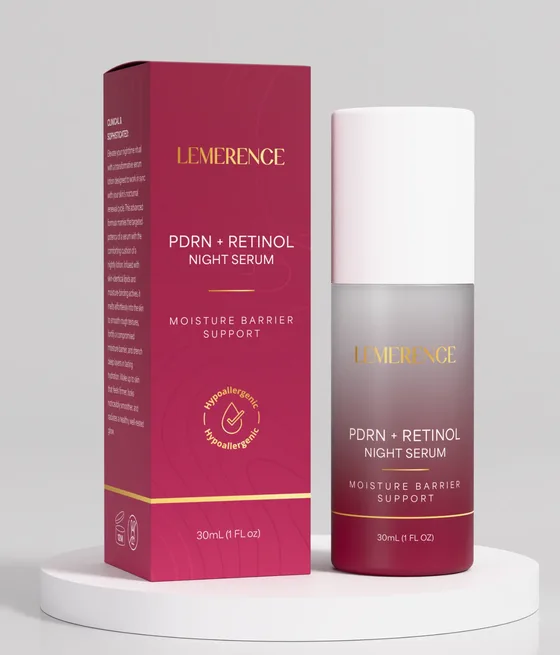
We built moisture barrier support into our PDRN + Retinol Night Serum from the start, with a comforting serum-lotion texture made for nightly use. Start slowly, follow the directions on the box and keep a good moisturizer close.
Questions
Can I use retinol if my skin feels dry?
Yes, with some care. Use fewer nights a week, try the sandwich method and keep a richer moisturizer in your routine. If your skin feels raw or stings, take a break first.
Is it OK to skip a night?
Absolutely. Skipping nights is one of the easiest ways to keep skin comfortable. Consistency over weeks matters more than any single night.
Should I stop retinol if my skin peels?
Light flaking early on is common. If peeling is significant or uncomfortable, take a few nights off, then restart at a slower pace.
Coming soon
PDRN + Retinol Night Serum
Anti-aging night serum. Softens the look of fine lines and wrinkles.
Meet the serumThis guide is general skincare information, not personal advice. Lemerence products are cosmetics. If you have a skin concern that worries you, talk with your doctor.